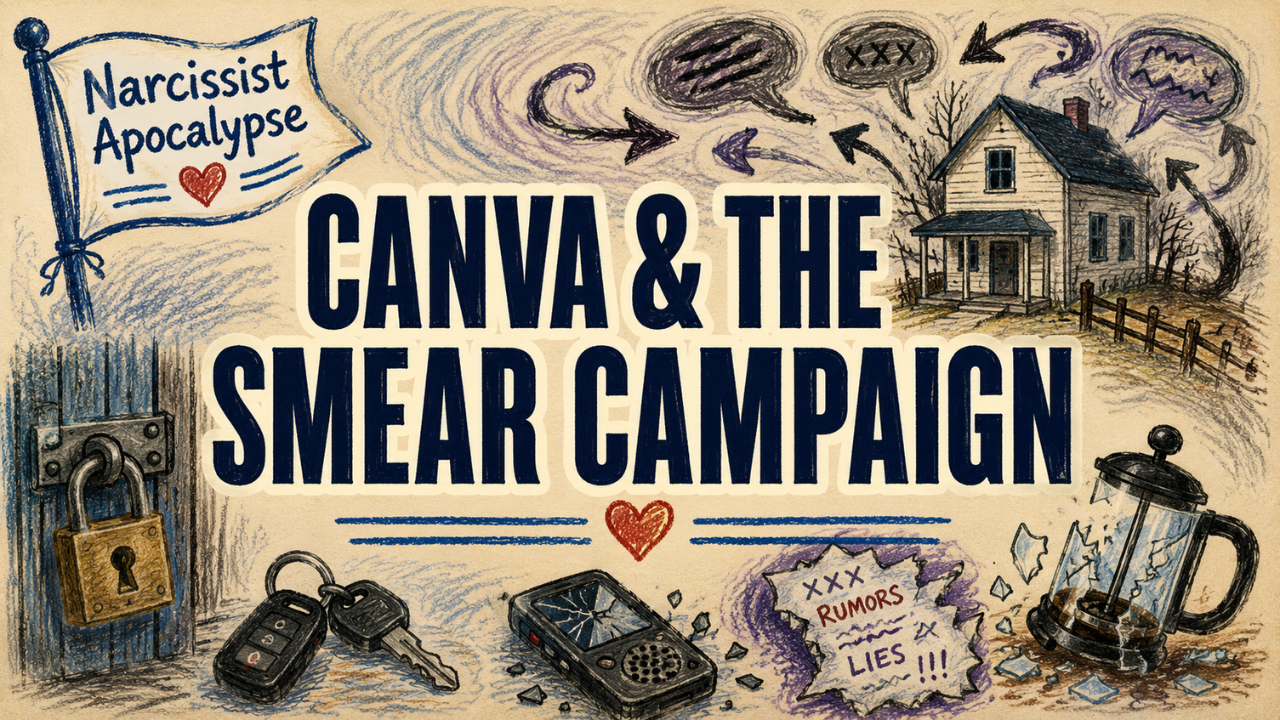
Why Narcissists Use Reactive Abuse to Frame You as the Villain
Reactive abuse occurs when a victim of emotional or psychological manipulation finally lashes out after prolonged provocation. Abusers systematically strip away a partner’s emotional regulation, creating a breaking point. Once the victim reacts, the abuser captures that single moment of instability to present themselves as the innocent party and their victim as the aggressor in a smear campaign.
Key Takeaways
- Reactive abuse is a deliberate tactic used to gaslight survivors into doubting their own reality.
- Abusers intentionally provoke reactions to gain 'evidence' of your instability for custody or legal battles.
- Recording conversations and maintaining strict boundaries are essential strategies for self-preservation.
- The smear campaign is designed to isolate the victim by controlling the narrative before they can speak their truth.
- Identifying your triggers is the first step toward reclaiming your emotional autonomy.
The Anatomy of Provocation
In relationships involving narcissistic dynamics, the abuser often employs 'death by a thousand cuts.' This involves persistent, low-level harassment that goes unnoticed by outsiders. By dismissing feelings, controlling financial access, and isolating the victim from their support systems, the abuser creates a high-pressure environment. The goal is to wear the victim down until their defenses crumble.
When you are living in a state of hyper-vigilance, your nervous system is constantly activated. By the time you reach your limit and respond with anger or frustration, you aren't acting from a place of malice; you are acting from a place of exhaustion. However, the narcissist ignores the months of abuse that led to that moment, focusing entirely on your reaction to prove their narrative that you are 'unhinged' or 'abusive.' This calculated shift in focus is what transforms a legitimate response to trauma into a weaponized piece of propaganda.
How to Spot a Smear Campaign
Smear campaigns are not just about bad-mouthing; they are strategic efforts to preemptively ruin your reputation. If you find that your partner is telling your mutual friends or family members that you are 'crazy,' 'jealous,' or 'emotionally unstable' before you have had a chance to share your own experiences, you are likely witnessing the early stages of a smear campaign.
Abusers often position themselves as the victim to solicit sympathy from others. By doing this, they build a wall of protection around themselves. When you finally attempt to speak out, you are already fighting an uphill battle because the narrative has been set by someone who sounds calm and rational—precisely because they aren't the ones actually suffering the abuse. Recognizing these patterns early allows you to stop trying to convince the narcissist of the truth and focus your energy on gathering your own evidence and seeking support from those who truly understand psychological abuse.
Protecting Your Truth
As discussed in the story of Canva, one of the most effective ways to combat the shifting narrative of an abuser is to document reality. When a partner gaslights you by insisting that events occurred differently than you remember, the psychological toll is immense. Keeping a journal or recording conversations can serve as a vital anchor to your own reality.
Strategies for the Journey
First, prioritize your mental clarity. When you notice yourself reacting to provocation, take a step back and identify the trigger. Ask yourself if this is a response to the current situation or an accumulation of sustained mistreatment. Second, limit the information you share with your abuser. They will use your vulnerabilities as ammunition in their smear campaigns. Third, seek out communities that understand the specific dynamics of narcissistic abuse, as they can provide the validation you need when the world around you is being fed a false story.
It is vital to realize that you do not need to win the debate with your abuser. In fact, arguing with a narcissist is exactly what they want, as it gives them more material for their narrative. The goal is not to win their approval or change their mind; the goal is to exit the cycle of abuse and recover your sense of self.
Conclusion
Understanding the link between reactive abuse and smear campaigns is essential for any survivor looking to rebuild their life. You are not responsible for the abuse you endured, and your reactions to that trauma do not define your character. To hear more about navigating these complex dynamics and finding the strength to move forward, you can listen to the full episode. Our goal is to provide you with the tools and validation you need to escape the narrative created by your abuser and start your journey toward healing.
Frequently Asked Questions
Is reactive abuse a form of my own toxicity?
No. Reactive abuse is a natural human response to persistent mistreatment. It is a psychological defense mechanism triggered by prolonged emotional or physical exhaustion, not an inherent character flaw.
Why do abusers record our arguments?
Abusers often record conversations to edit them later or present them out of context. By isolating a segment where you reacted in anger, they can 'prove' to others that you are the aggressor, effectively gaslighting everyone involved.
How do I combat a smear campaign?
The most effective strategy is to stay calm and remain consistent. Do not engage with the lies, as this only provides the abuser with more 'fuel.' Focus on documenting the actual reality for yourself and lean on a support system that knows your true character.