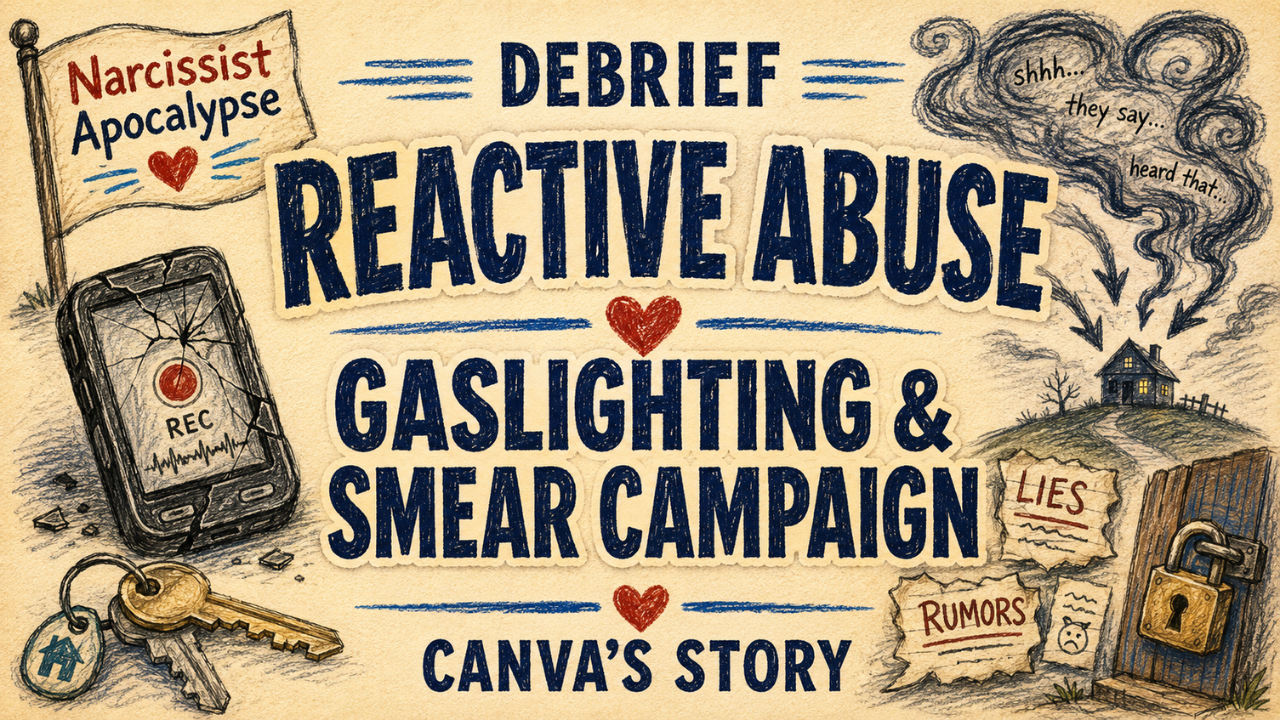
Why You Should Record Conversations for Evidence in Abusive Relationships
Recording interactions is often a final, desperate strategy for survivors facing chronic gaslighting. By capturing audio evidence of abuse, victims can combat the reality-distorting effects of coercive control, preserve their own sanity, and provide a factual baseline when their abuser attempts to smear their character to friends, family, or legal authorities.
Key Takeaways
- Recording conversations can act as a psychological anchor, helping you trust your own memory when faced with gaslighting.
- Documentation is crucial for maintaining an objective reality when an abuser actively attempts to rewrite history.
- Strategic documentation can serve as a vital defensive tool during smear campaigns or custody battles.
- Always prioritize personal safety and check local legal regulations regarding two-party consent laws before recording.
- The goal of recording is not to 'win' the argument, but to protect your mental health and provide a record of the truth.
The Reality Distortion of Gaslighting
In toxic relationships, gaslighting is rarely a one-time event; it is a cumulative assault on your perception of reality. When an abuser consistently denies past conversations, minimizes their own aggression, or projects their behavior onto you, your brain begins to struggle with cognitive dissonance. You know what happened, yet the person closest to you insists the event never occurred or that your memory is faulty.
As discussed in the case of Canva, this distortion is often a precursor to a smear campaign. When the abuser begins to craft a narrative that frames you as the aggressive party, they rely on your lack of evidence to make their version of events the dominant one. Having a recording is not about engaging in a debate with the narcissist; it is about keeping a tether to the truth so you don't lose yourself in the process of surviving.
The Psychological Impact of Gaslighting
Constant denial of your reality leads to significant psychological fatigue. When you cannot trust your memory, you become more suggestible and less likely to leave the relationship, as you begin to believe that perhaps you are the problem. Recordings serve as a silent witness, offering validation that your experiences were valid and that the events you remember actually took place as you perceived them.
Documentation as a Defense Tool
Smear campaigns thrive in a vacuum of facts. Abusers often project their own behaviors—such as yelling, threats, or manipulation—onto the survivor to appear as the victim. If you are ever forced into a legal setting, such as a court hearing regarding custody or domestic violence protections, you may find that the abuser has already laid the groundwork to discredit your character.
By having documented interactions, you shift the narrative from a 'he-said, she-said' dynamic toward evidence-based reality. While you should never attempt to 'force' a narcissist to admit the truth through your recordings, these files are invaluable for your own records and for providing your support system or legal counsel with context that is often intentionally obscured by the abuser.
Risks and Considerations
While recording can be a life-saving tool for maintaining sanity, it must be approached with extreme caution. The primary priority is your safety. In some high-conflict scenarios, an abuser discovering they are being recorded could escalate their physical or emotional aggression.
Furthermore, it is essential to understand the legal landscape of your jurisdiction. Familiarize yourself with local 'one-party' or 'two-party' consent laws. While the focus here is on the preservation of your sanity, legal admissibility is a separate, complex issue. Never assume a recording is automatically admissible in court, and always prioritize not putting yourself in further physical danger for the sake of gathering evidence.
Final Thoughts
Healing from narcissistic abuse involves accepting that you cannot control the narrative an abuser paints about you. They will lie, and they will twist your actions to suit their agenda. Your role is not to correct every lie, but to remain grounded in your own truth. Recordings serve as a powerful tool to protect that truth, ensuring that no matter what version of reality they present to the world, you remain confident in what actually occurred.
To explore the nuances of protecting yourself against gaslighting and smear campaigns, Listen to the full episode for a deeper understanding of how to reclaim your agency.
Frequently Asked Questions
Is recording conversations always the right choice?
Recording is a personal choice based on safety. If you feel that it will help you maintain your sanity and protect your truth, it can be a valuable tool, but it should never be done if it risks your immediate physical safety.
What do I do if I discover a smear campaign?
Focus on grey-rocking the abuser and surrounding yourself with a support system that knows your true character. You cannot change the mind of the narcissist, and attempting to 'clear your name' often only provides them with more ammunition.
Why is the truth so important during abuse?
Abuse thrives on secrecy and confusion. Gaslighting is designed to make you doubt your own instincts. Keeping a record helps you stay connected to your reality, which is the foundation of your eventual path toward healing and independence.