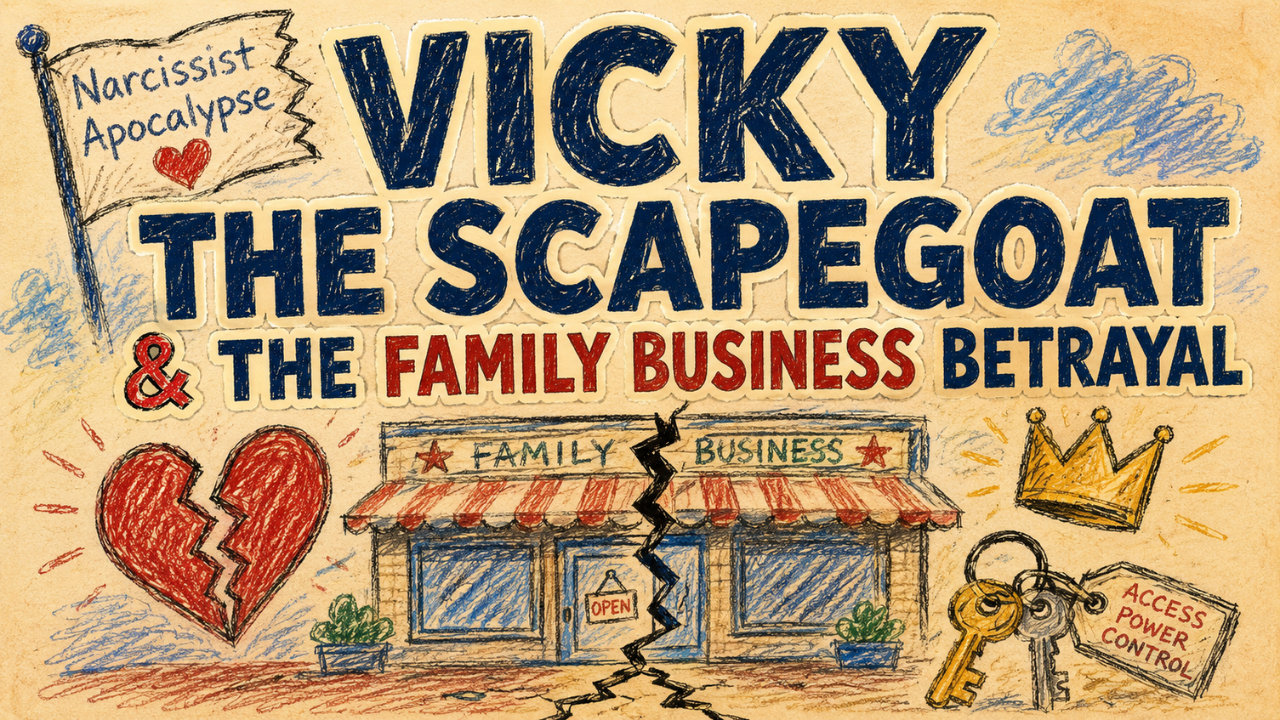
Working for Narcissistic Parents: The Hidden Cost of Family Business Loyalty
Working for a family business under narcissistic parents often traps adult children in a cycle of exploitation. This article explores the signs of professional coercive control, why parental promises of succession often lead to betrayal, and how to identify the toxic patterns that prioritize the 'golden child' over the professional growth and psychological safety of the scapegoated sibling.
Key Takeaways
- Understand how narcissistic parents use career advancement as a tool for emotional manipulation.
- Recognize the 'golden child' vs. 'scapegoat' dynamic within a business hierarchy.
- Identify the red flags of financial and professional coercive control.
- Learn how to set boundaries when professional expectations conflict with emotional health.
- Discover the risks of assuming that business succession is a form of parental love.
The Illusion of the Family Legacy
Many adult children enter their family business with the sincere belief that they are building a legacy. They equate hard work, loyalty, and technical competence with future stability and parental approval. However, when the business is owned or managed by a narcissistic parent, the environment is rarely meritocratic. Instead, the business becomes an extension of the parent's ego and a theater for their psychological control.
For the identified scapegoat, the office is not a place of professional growth, but a site of constant evaluation where the goalposts are always moving. When you work for a parent who views you as the family target, your contributions are often minimized or stolen, while your mistakes—however minor—are magnified to justify systemic abuse.
Professional Coercive Control
Coercive control is typically discussed in romantic relationships, but it is equally damaging in a professional context within a family. Narcissistic parents often exert this control by restricting an adult child’s autonomy under the guise of 'mentorship.' They may refuse to provide adequate training, withhold essential information, or deliberately block the child from key decision-making roles, all while promising that a leadership position is 'coming soon.'
This is a tactical game of dangling the carrot. By keeping the child in a state of professional insecurity, the parent maintains complete leverage. When that child tries to establish boundaries or demands fair treatment, the parent often uses the threat of job loss or financial ruin to silence the victim, effectively tethering their livelihood to their emotional submission.
The Golden Child and Business Betrayal
The most painful betrayal often occurs when the parent brings a 'golden child' sibling into the business. Regardless of the sibling’s actual performance or work ethic, the golden child is often treated with a level of deference that the scapegoat never receives. In many cases, the narcissistic parent will bypass the more competent, hard-working scapegoat to promote the golden child, effectively gaslighting the scapegoat into believing that their years of effort were never enough.
This dynamic is designed to pit siblings against each other, ensuring that the parent remains the central authority figure who decides who 'wins.' Recognizing this betrayal is critical. If you find yourself constantly working harder, sacrificing your health, and absorbing the brunt of the workload only to be overlooked in favor of a sibling, you are not failing at your job—you are failing to satisfy a parent whose objective is not to run a business, but to manipulate the family hierarchy.
Moving Toward Professional Independence
Breaking free from a toxic family business requires more than just submitting a resignation letter. It often involves a profound period of grief and the realization that the business was a cage, not a career path. Leaving a family firm often results in the parent framing the child as 'disloyal' or 'ungrateful,' which is a classic projection used to hide the parent’s own abusive behavior.
The path to healing involves untangling your professional identity from the family's validation. You must define success on your own terms and recognize that your skills have value in the open market—value that was being systematically devalued by the very people who claimed to be your greatest supporters. To hear a detailed account of this specific experience, you can Listen to the full episode to understand how one survivor navigated the transition from scapegoat to independence.
Frequently Asked Questions
How do I know if my parent is using the family business to control me?
Signs include being denied training despite being in the role, having your decision-making power restricted, being paid significantly less than market value, or being threatened with job loss when you set personal boundaries.
Why does the narcissist parent favor the golden child in the business?
The parent favors the golden child to keep the scapegoat in a state of perpetual struggle. This rivalry keeps both siblings focused on gaining the parent's approval rather than challenging the parent's authority.
Is it possible to stay in a family business and be healthy?
It is exceptionally difficult. Even if you maintain boundaries, the nature of the narcissistic parent's need for control will likely lead to ongoing conflict. Most survivors find that true professional autonomy only comes when they remove themselves from the environment entirely.