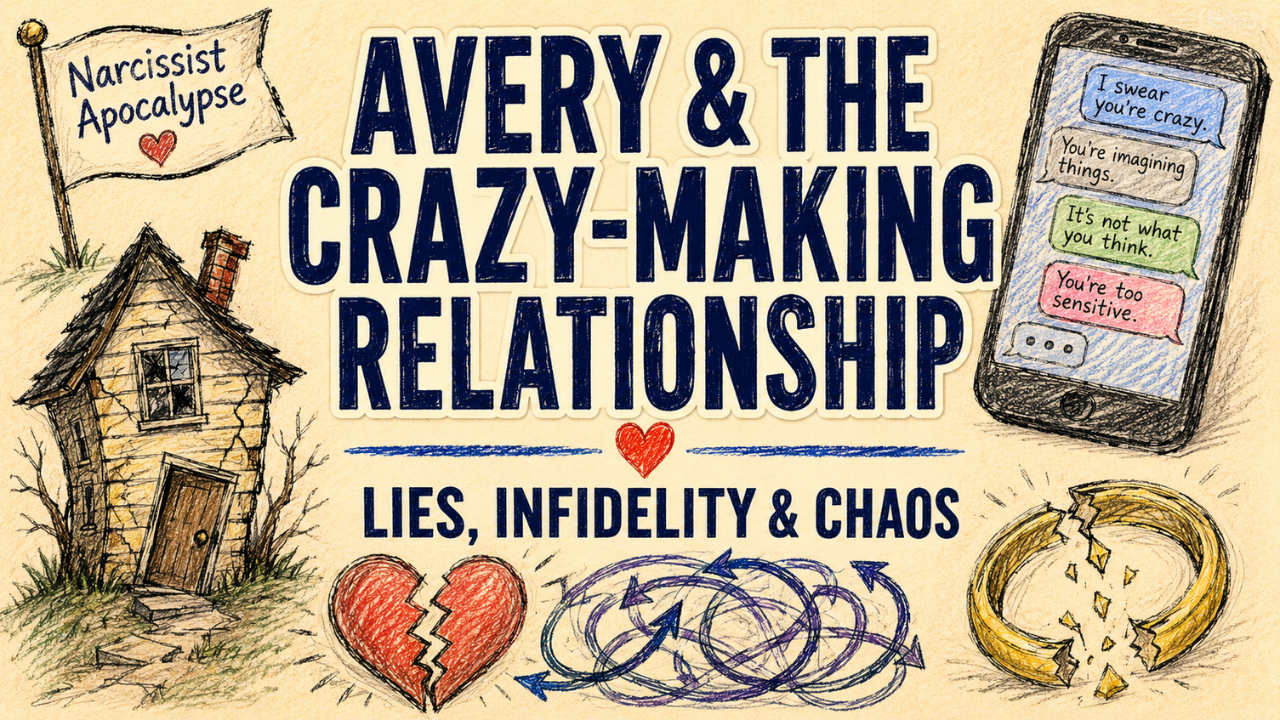
How to Decode Circular Conversations and Word Salad in Toxic Relationships
Circular conversations and word salad arguments are insidious tactics used by emotionally abusive partners to disorient, exhaust, and control victims. By understanding how these loops are intentionally constructed to prevent resolution, you can learn to recognize the red flags, stop defending yourself against the impossible, and reclaim your mental clarity from toxic manipulation.
Key Takeaways
- Circular conversations are intentionally designed to exhaust your cognitive resources and prevent any resolution.
- Word salad techniques involve throwing out nonsensical, overwhelming streams of accusations to shift the focus away from the abuser's behavior.
- Staying in these loops triggers chronic hypervigilance as you constantly monitor your tone and memory to avoid triggering a fight.
- Trying to find logic in an illogical argument guarantees failure because the goal is deflection, not understanding.
- Recognizing these patterns allows you to disengage and protect your emotional energy from manipulation.
The Anatomy of Circular Conversations
If you have ever spent four hours debating a simple boundary, only to find yourself apologizing for things you never did while the original issue remains completely unaddressed, you have experienced a circular conversation. These dialogues are not normal disagreements where two people struggle to see each other's point of view. Instead, they are meticulously engineered traps designed to drain your energy.
In a healthy relationship, an argument has a beginning, a middle, and an eventual resolution or compromise. In a toxic dynamic, the finish line keeps moving. Just when you think you have reached an agreement, your partner introduces a completely new grievance, rewrites history, or completely denies what they said five minutes prior. You leave the conversation feeling dizzy, disoriented, and entirely responsible for the breakdown in communication.
The primary function of the circular conversation is exhaustion. When your brain is subjected to hours of psychological gymnastics, your ability to think critically diminishes. You become compliant simply to make the torture stop. This dynamic forces survivors into a state of hypervigilance, where every word spoken is weighed heavily out of fear that it might trigger another exhausting, unwinnable marathon of words.
Decoding the Chaos of Word Salad Arguments
Closely related to the circular conversation is the phenomenon known as word salad. When confronted with undeniable evidence of wrongdoing, infidelity, or poor behavior, an abusive partner may launch into a torrential stream of consciousness that defies logic, grammar, and reason.
Word salad involves stringing together a massive volume of exaggerated accusations, unrelated past events, philosophical musings, and direct insults. It is an overwhelming verbal avalanche designed to short-circuit your brain. Because your natural instinct as an empathetic person is to make sense of what the other person is saying, you try to untangle the mess. You parse through the ridiculous claims to find the nugget of truth, completely unaware that there is no truth to be found.
This tactic effectively shifts the burden of proof. Suddenly, you are no longer discussing your partner's deceit or harmful actions; you are desperately defending your character against bizarre, fabricated claims. The abuser successfully changes the courtroom from an inquiry into their behavior to a trial assessing your sanity, tone, and emotional stability.
The Deep Psychological Toll of Crazy-Making Tactics
Constant exposure to circular arguments and word salad creates a profound sense of self-doubt, often referred to as reality erosion. When your perception of events is consistently challenged, mocked, or rewritten, you begin to doubt your own memory and judgment. You ask yourself: Did I say that? Am I being too sensitive? Maybe they are right, and I am the difficult one.
This self-doubt is the bedrock of emotional abuse. It keeps you tethered to the relationship because you rely on your partner to define reality for you. Over time, this dynamic erodes your self-esteem and creates a trauma bond. You work harder and harder to communicate perfectly, believing that if you just find the right words, the loving person you first met will finally reappear.
However, the trap lies in the fact that your partner is not engaging in good-faith communication. They are not looking for a resolution; they are looking for control. Once you realize that the game is rigged, you stop playing by their rules.
How to Disengage and Protect Your Peace
Breaking free from the cycle of circular conversations requires a fundamental shift in how you respond to verbal traps. You must accept a hard truth: you cannot logic someone out of a position they arrived at through manipulation.
When you spot the signs of a word salad argument beginning, the best response is radical disengagement. This does not mean you must win the argument; it means you refuse to participate in an irrational dynamic. Here are a few ways to protect your energy:
- Drop the rope: Stop trying to make them understand your point of view. They understand it; they simply refuse to validate it.
- Use gray rock communication: Keep your responses brief, boring, and devoid of emotional charge. Do not feed the fire with defensive explanations.
- Recognize the distraction: When they bring up five unrelated topics mid-argument, refuse to chase the rabbit holes. Gently redirect to the core issue, or walk away entirely.
- Trust your internal reality: Keep a private journal of events, conversations, and feelings to anchor yourself in the truth when reality-distortion tactics are deployed.
True peace in a relationship only arrives when you stop trying to find calm inside a storm created intentionally by your partner. Recognizing these patterns is the first step toward reclaiming your sanity and your life.
Conclusion
Navigating the exhausting world of circular conversations and word salad arguments can make you feel like you are losing your mind, but you are not alone in experiencing this form of psychological wear-and-tear. Understanding these tactics helps lift the fog of self-doubt so you can see the relationship dynamic clearly for what it truly is. To hear a powerful firsthand account of surviving these exact crazy-making behaviors, coercive control, and the journey toward reclaiming self-trust, Listen to the full episode today.
Frequently Asked Questions
What is a circular conversation in a relationship?
A circular conversation is a dysfunctional dialogue pattern where an issue is brought up, but the discussion goes in endless loops without ever reaching a resolution, leaving the victim confused and emotionally drained.
Why do abusive partners use word salad arguments?
Abusive partners use word salad to overwhelm their partner with chaotic, contradictory, or irrelevant information, effectively short-circuiting their ability to think clearly and hold them accountable.
How can I stop getting sucked into circular arguments?
The most effective way to handle a circular argument is to recognize the loop early, refuse to defend yourself against baseless claims, and calmly disengage or end the conversation.
What is the psychological impact of constant circular debates?
Constant circular debates cause severe self-doubt, memory erosion, chronic hypervigilance, and emotional exhaustion, as the victim constantly tries to decode what went wrong.