How to Protect Your Reputation During a Narcissistic Smear Campaign
A narcissistic smear campaign is a calculated attempt to destroy your reputation, social standing, and support system following an exit from an abusive relationship. By learning to identify the early warning signs of social sabotage and implementing firm communication boundaries, you can minimize the damage caused by false narratives and protect your mental well-being from further isolation.
Key Takeaways
- Understand that the goal of a smear campaign is to preemptively paint the victim as the aggressor.
- Learn why engaging with the narcissist’s lies often validates their narrative to outside observers.
- Discover the importance of maintaining your integrity while others might be fed disinformation.
- Identify why the LGBTQ community or tight-knit social circles are often targeted for maximum emotional damage.
- Recognize that your silence is not weakness; it is a tactical choice to deny the abuser oxygen.
The Mechanics of the Smear Campaign
When a relationship with a narcissist ends, the abuser often fears that their true self will be exposed to the world. To get ahead of this, they launch a preemptive strike known as a smear campaign. This is not merely gossip; it is a systematic, often malicious, effort to rewrite history. In many cases, the abuser will take the victim’s own vulnerabilities, past traumas, or sensitive disclosures and twist them into weapons.
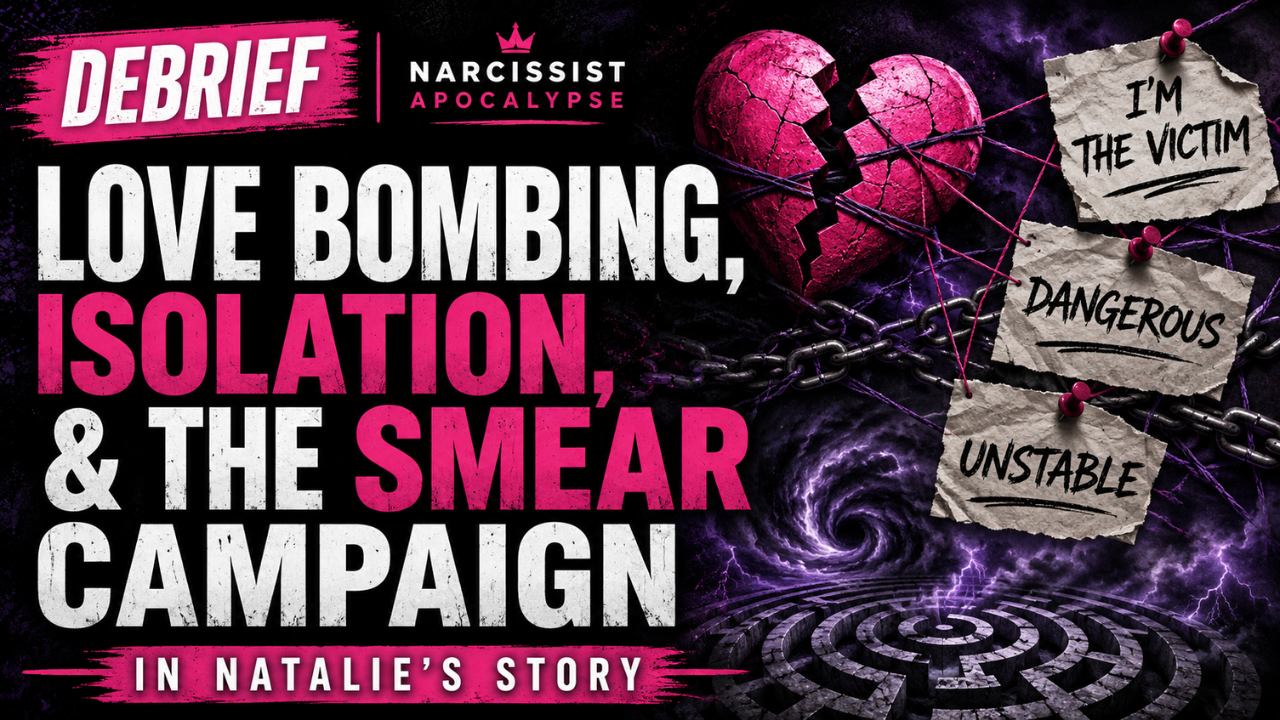
As discussed in the recent breakdown of Natalie’s story, the smear campaign is frequently directed at the survivor’s most cherished communities. By isolating the victim from their primary support systems, the abuser ensures that the survivor has nowhere to turn when the emotional abuse escalates. This creates a terrifying feedback loop: you are hurt by the abuse, and when you seek support, you find that your friends and family have already been poisoned against you.
Targeting Vulnerable Social Circles
Abusers look for environments where they can gain the most social capital. In tight-knit communities—such as the LGBTQ community mentioned in Natalie's story—the abuser often positions themselves as the protector or the injured party. They utilize the existing bonds of trust within that community to ensure their version of events is believed without scrutiny. By presenting you as the “unstable” or “dangerous” one, they effectively weaponize your community’s values against you.
Managing the Fallout Without Escalation
The immediate impulse when you learn someone is spreading lies about you is to scream the truth from the rooftops. You want to correct the record, defend your character, and show people the reality of what happened. However, this is exactly what the abuser wants. Engaging with a smear campaign is often a trap that forces you to enter a “he-said, she-said” cycle that favors the person who is most comfortable lying.
The Dangers of Engaging
When you attempt to “correct” the narcissist’s narrative, you inadvertently play into their hands. If you become reactive or angry in your defense, they will use your reaction to validate their claims that you are unstable. The more you explain, the more it looks like you are desperate or guilty to an uninformed observer. Instead, the most effective defense is often a strategic withdrawal from their orbit and a refusal to engage in the mud-slinging process.
Reclaiming Your Narrative Through Silence
True healing after a smear campaign involves detaching your sense of self from the opinions of those who were swayed by the narcissist. It is a painful realization, but those who are willing to believe the abuser’s narrative without hearing your side are often not the people who should be in your inner circle anyway. By stepping away from the conflict, you regain your power. You stop being the subject of their script and begin writing your own story, defined by your reality rather than their manipulation.
Seeking Validation Elsewhere
You cannot receive validation from the same people who are participating in the smear campaign. Instead, look toward professional therapy or support groups specifically designed for victims of narcissistic abuse. Connecting with others who understand the patterns of coercive control—as highlighted in the full analysis of the situation—provides the objective reality check you need to remain grounded.
Moving Forward
Dealing with the aftermath of an abusive relationship is difficult enough without the added weight of a public smear campaign. Remember that your character is not defined by the lies told about you, but by the strength you demonstrate in choosing to heal rather than retaliate. For more in-depth exploration on how to process these dynamics and break free from the patterns of control, Listen to the full episode. Understanding the tactics used against you is the first step toward regaining your freedom and building a life defined by your own terms.
Frequently Asked Questions
Why does the abuser spread lies to my friends?
The abuser spreads lies to isolate you from your support network. If they can turn your friends and family against you, they effectively remove your ability to seek help, validate your experience, or find safety when they continue their abuse.
Should I confront the people who believe the lies?
Generally, no. Trying to convince people who have already been primed to dislike you usually backfires. Instead, focus on maintaining healthy boundaries and surrounding yourself with people who trust you unconditionally.
How do I know a smear campaign is happening?
You may notice friends acting distant, receiving passive-aggressive messages, or hearing secondhand stories about yourself that are distorted. If your social world suddenly changes and people seem to be viewing you through a negative lens without cause, it is a hallmark sign.
Is ignoring the smear campaign the same as admitting guilt?
No. Ignoring the campaign is a form of boundary-setting. By not engaging, you deprive the abuser of the reaction they need to continue their manipulation, which ultimately helps you move on faster.