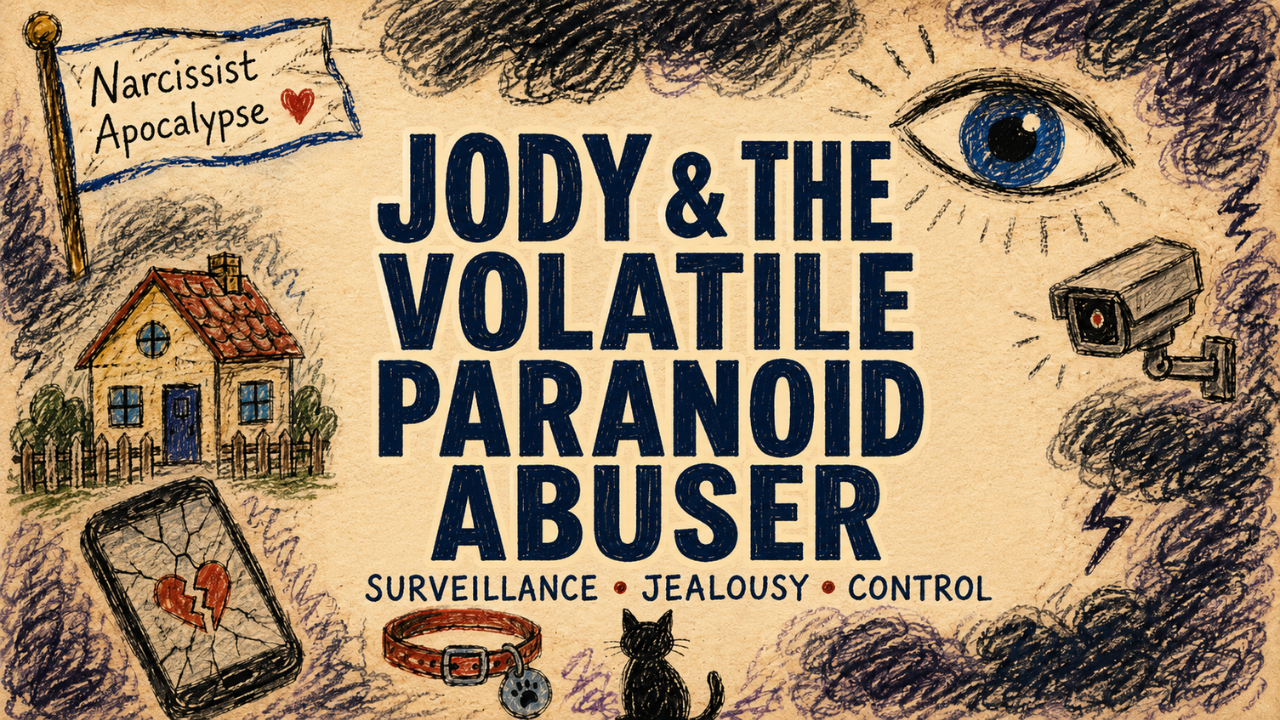
When Paranoia Turns Into Surveillance: Recognizing Signs of Digital Coercive Control
Digital coercive control occurs when an abusive partner uses technology, such as phone monitoring, GPS tracking, and hidden cameras, to exert dominance and eliminate a victim’s privacy. Recognizing these early signs of surveillance is critical for safety, as what often presents as 'protective' behavior is actually a calculated strategy to erode autonomy, isolate the victim, and maintain absolute power within the relationship.
Key Takeaways
- Understand that intense jealousy often masks a deep-seated need for total surveillance.
- Learn to identify the 'digital trap,' where partners demand access to passwords or accounts under the guise of transparency.
- Recognize how constant monitoring creates a state of perpetual hyper-vigilance that mirrors PTSD symptoms.
- Discover why 'proving your innocence' to a paranoid partner never works because the goalposts will always move.
The Illusion of Transparency
In many abusive relationships, the abuser frames their need for surveillance as a pursuit of 'honesty' or 'security.' They may argue that if you have nothing to hide, you should have nothing to fear. However, this is a classic manipulation tactic. True intimacy is built on trust, not on the ability to audit your partner’s movements or private communications.
When a partner begins reviewing bank statements, tracking your location in real-time, or demanding access to your phone, they are not acting out of a desire for connection. They are attempting to collapse the distance between themselves and your internal life. By stripping away your digital boundaries, they gain the ability to rewrite your reality, interpreting every innocent text or delay as evidence of a perceived betrayal.
Recognizing the Escalation
Surveillance rarely starts with a hidden camera; it often begins with 'innocent' requests. It might start with a shared location app 'just for safety' or an shared email password 'for convenience.' Slowly, these tools become weapons. When the partner begins to record conversations or interrogate you about your call logs, they are no longer just monitoring your behavior—they are attempting to curate your world to fit their narrative of suspicion.
The Trap of Proving Innocence
One of the most psychologically damaging aspects of living with a paranoid, surveillance-focused abuser is the compulsion to prove your innocence. You find yourself explaining why a drive home took ten minutes longer than expected, or justifying a standard work email as if it were a illicit romantic overture. This behavior is a survival mechanism, but it is ultimately a losing battle.
Because the abuser’s paranoia is not rooted in reality, no amount of evidence can satisfy them. You might pass a polygraph, provide screenshots, or offer up your passwords, but for the abusive partner, these are not truths—they are merely obstacles to be bypassed. As their paranoia escalates, they will create new 'crimes' for you to answer for, effectively keeping you in a state of constant, defensive exhaustion.
Breaking the Cycle of Monitoring
If you suspect that your digital life is being monitored, it is essential to prioritize your physical and digital security. Abusers who rely on surveillance often escalate their physical intimidation when they feel their access to your private information is threatened. This is why secret exit planning and professional support are so vital.
Recovery involves reclaiming your right to a private life. It means understanding that you are not responsible for managing someone else’s delusions of betrayal. The energy you spent justifying your every action belongs to you. By setting hard boundaries—even if that means ending the relationship—you start the process of reclaiming your autonomy from the shadow of the surveillance state.
Conclusion
The transition from a loving partner to a paranoid warden is a slow, methodical process that often leaves victims feeling trapped in their own homes. If you are experiencing this type of psychological warfare, know that you are not alone and that your experiences are valid. For a deeper understanding of how these patterns manifest and how survivors find their way back to safety, Listen to the full episode. Hearing from those who have successfully navigated this landscape can provide the validation you need to start your own journey toward freedom.
Frequently Asked Questions
Is phone monitoring always a sign of abuse?
Yes, when it is non-consensual or coerced through threats and intimidation. While some couples share locations for mutual safety, a demand for access that is coupled with interrogation is a clear marker of coercive control.
Why do abusers get paranoid about everything?
It is rarely about what the victim is doing. The paranoia is a projection of the abuser's own lack of trust, their desire for total control, or, in some cases, an manifestation of their own manipulative tendencies and substance-related issues.
What should I do if I think my devices are monitored?
If you believe your devices are compromised, use a 'safe' device—like a public library computer or a friend’s phone—to research support resources. Avoid changing your passwords on a potentially monitored device, as the abuser may receive a notification.