Why You Feel Responsible for Your Partner's Happiness: Surviving Decision-Making Traps
When a partner consistently refuses to make decisions, you may find yourself trapped in a cycle of anticipatory anxiety and hyper-responsibility. This specific form of psychological manipulation forces you to take on the burden of domestic leadership, only to be criticized for the choices you make. By understanding this dynamic, you can reclaim your autonomy and stop the cycle of constant blame.
Key Takeaways
- "Weaponized passivity" occurs when a partner forces you to choose, then punishes you for the outcome.
- Taking on all household decisions creates a false sense of control that actually serves the abuser's agenda.
- Constant decision-making under pressure leads to "decision fatigue," which reduces your ability to identify abuse.
- Abusers use your choices to establish a pattern of "deniable criticism," making it look like they are just unhappy with your judgment.
- You can break this cycle by shifting the focus back to their non-participation rather than the specific choice made.
The Burden of the Default Decider
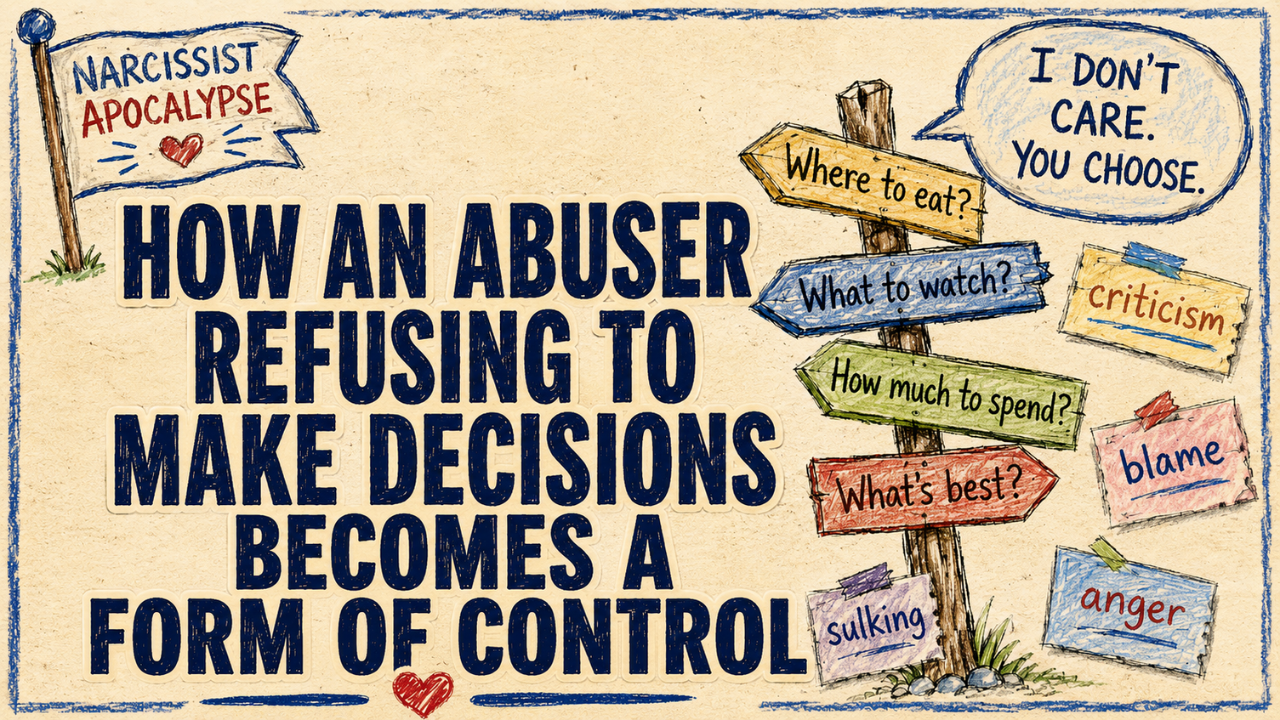
In many relationships, one person inevitably becomes the "Default Decider." While this can look like mere division of labor on the surface, it becomes a tool of coercive control when the other party refuses to engage while retaining the right to judge. When you are the one deciding where to eat, how to spend money, or how to discipline children, you are also the one who becomes the automatic target for any dissatisfaction.
This is often framed as being "easygoing" by the abuser. They might say, "I don't care, you pick," or "Whatever you want is fine with me." However, this is rarely true. What they are actually doing is delegating the risk of the decision to you. If the outcome is good, they take part in it. If the outcome is bad, they have a ready-made complaint to hold over your head.
Identifying Weaponized Passivity
How do you know if this is a control tactic rather than just a personality quirk? The primary indicator is the "sting" that follows your decision. In a healthy relationship, if a partner asks you to choose dinner and you pick a place they don't like, they might say, "I'm not a fan of that place, maybe next time we can try X."
In a controlling dynamic, the reaction is often disproportionate. It may involve sulking, cold silence, or a critique of your "pattern" of making bad decisions. This is known as weaponized passivity. By refusing to engage in the decision-making process, the abuser ensures that they are never the one "at fault" for a negative outcome. They have created a system where you are always the one in the driver's seat, and they are the permanent backseat driver.
The Goalpost Shift
The most exhausting part of this behavior is that the criteria for a "good" decision constantly move. You might choose a budget-friendly vacation, only to be told you are being cheap. The next time, you choose a luxury option, only to be criticized for being reckless with money. Because the abuser never stated their preference upfront, they retain the power to define the decision as "wrong" after the fact. This keeps you in a perpetual state of walking on eggshells, trying to guess what they want before they even know it themselves.
Reclaiming Your Autonomy
Reclaiming your life requires a radical shift in how you handle these moments. You must stop playing the game of "guessing their preference." When a partner says, "I don't care, you choose," you can respond with a clear boundary: "I've already made the last three decisions, so I'd like you to take the lead on this one. I'm happy with whatever you decide."
If they refuse to participate or insist that you make the call, you must release the internal pressure to make it "perfect." Acknowledge that the outcome of the decision belongs to both of you, regardless of who picked it. When they attempt to criticize the choice, you can calmly say, "You were invited to participate in this decision and declined. I made the best choice I could with the information I had."
This is not about being difficult; it is about stopping the cycle of forced responsibility. By refusing to be the sole architect of your shared life, you strip the abuser of their ability to use your choices as ammunition. To hear more about how this specific dynamic functions, Listen to the full episode to understand the deeper layers of this coercive behavior.
Frequently Asked Questions
Is it abuse if they just don't want to decide anything?
Lack of interest in decision-making is not inherently abusive. It becomes a form of control when it is paired with subsequent criticism, blame, or emotional withdrawal when your decisions do not align with their hidden expectations.
How do I stop feeling guilty when they are unhappy with my choice?
Recognize that their unhappiness is a choice designed to control you. Remind yourself that you invited their input, and they consciously chose not to provide it. You are not responsible for their emotional regulation.
Can this behavior be changed with communication?
Often, bringing it up leads to gaslighting or further accusations that you are "making things difficult." If they refuse to acknowledge the power imbalance, it is usually a sign that the behavior is intentional and unlikely to change through discussion alone.