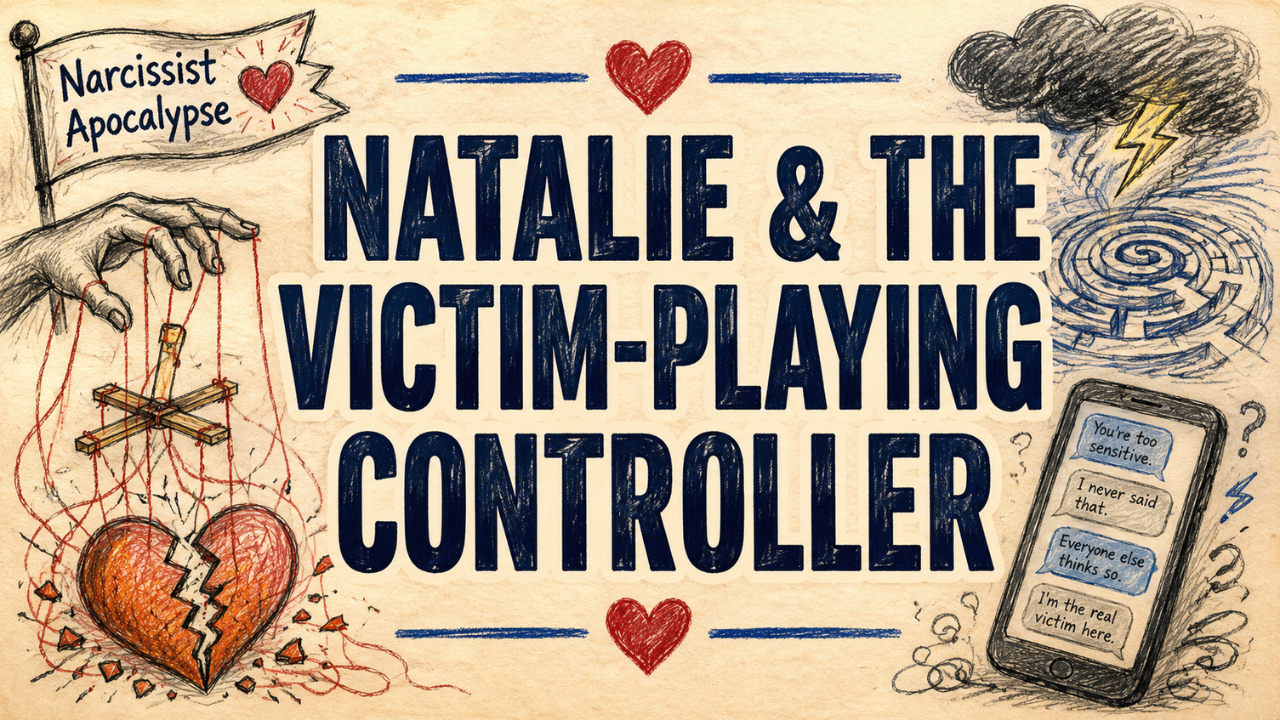
Unmasking the Victim-Playing Narcissist: How They Manipulate Empathy
Discover how narcissists expertly weaponize victimhood to control others, turning genuine empathy into a tool for manipulation. This post delves into the specific tactics used by controllers who play the victim, helping you recognize these patterns and protect yourself from emotional exploitation.
Key Takeaways
- Narcissists often feign victimhood to gain sympathy and avoid accountability.
- The "victim-playing controller" uses past traumas or minor slights to justify present abusive behavior.
- This manipulation tactic preys on the empathy and desire to help of others.
- Recognizing the pattern of victim-playing is crucial for breaking free from manipulative relationships.
- Understanding the narcissist's motive behind playing the victim empowers you to set boundaries.
The Art of Playing the Victim
In relationships with narcissistic individuals, a common and deeply unsettling tactic is the deliberate portrayal of oneself as a victim. This isn't about genuine suffering or experiencing hardship; it's a calculated performance designed to elicit sympathy, deflect blame, and maintain control. The "victim-playing controller" uses their perceived misfortunes, whether real or exaggerated, as a shield against any criticism or accountability. They masterfully turn a spotlight onto their own supposed suffering, ensuring that their needs, feelings, and narrative always take precedence. This strategy preys on our natural human inclination to empathize with those who appear to be in pain or distress. When someone consistently presents themselves as wronged, misunderstood, or deeply hurt, it's difficult not to feel compassion. The narcissist weaponizes this empathy, transforming it into a lever to manipulate others into doing their bidding, forgiving their transgressions, and remaining trapped in a cycle of their making.
How Victimhood Becomes a Weapon
The core of this manipulative strategy lies in its ability to shift focus and responsibility. When a narcissist is confronted with their own behavior – be it lying, controlling actions, or emotional abuse – they rarely take ownership. Instead, they pivot, often with dramatic flair, to how *they* have been wronged. They might recount past traumas, real or imagined, to explain away their current bad behavior. For instance, a lie might be justified by saying, "I only lie because people always betray me." Or controlling behavior might be defended with, "I have to control things because no one ever supports me." This is a classic deflection. The conversation is no longer about the abusive act that occurred; it's now about the narcissist's supposed pain and suffering. They become the injured party, and you, the observer or target of their behavior, are suddenly in the position of needing to comfort or placate them. This is a profoundly disorienting experience. It flips the script, making the abuser appear vulnerable and the victim of abuse appear insensitive or cruel for even questioning the abuser's actions.
Exploiting Empathy and Compassion
At the heart of this manipulation is a keen understanding of human psychology, particularly our innate desire to help and comfort. Narcissists, even if not consciously trained psychologists, are often adept at reading people and identifying their vulnerabilities. They see empathy not as a strength, but as a resource to be exploited. When Natalie, a guest on the Narcissist Apocalypse podcast, recounted her experiences, she highlighted how her partner used manufactured crises and demands that she prioritize him above her own well-being. This is a prime example of victim-playing. By making his own needs and perceived sufferings paramount, he was compelling Natalie to abandon her own life and support systems. The implication was always that if she truly cared, she would sacrifice everything for him. This isn't about genuine need; it's about creating a situation where the narcissist's narrative of suffering is the only one that matters, and your role is to alleviate it, regardless of the cost to yourself. They create a false emergency, a perpetual state of crisis, where their victimhood demands your full attention and resources.
The Cycle of Blame-Shifting
The victim-playing narcissist operates on a perpetual cycle of blame-shifting. When their actions lead to conflict or negative consequences, they are incapable of accepting responsibility. Instead, they reframe the situation to cast themselves as the injured party. This can manifest in several ways:
- Exaggerating past hurts: Minor offenses or past relationship failures are amplified to explain current bad behavior.
- Feigning incompetence: "I'm just not good at managing money," they might say, after squandering shared funds.
- Playing the misunderstood genius: Their complex actions or hurtful words are attributed to being "too smart" or "too sensitive" for others to comprehend.
- Creating elaborate scenarios: Fabricating situations where they were provoked, deceived, or unfairly treated.
This constant redefinition of reality is exhausting for the person on the receiving end. It creates a cognitive dissonance where you know what you saw or experienced, but the narcissist's narrative contradicts it entirely. You are left questioning your own perception and sanity, which is exactly what the narcissist intends. By making you doubt yourself, they reinforce their own narrative and solidify their control. The goal is to ensure that any discussion of their behavior immediately gets redirected to their own supposed pain, making it impossible to address the actual abuse.
Recognizing the Red Flags
Identifying a victim-playing narcissist requires paying close attention to patterns of behavior and communication. Here are some key indicators to watch out for:
- Consistent deflection of responsibility: They rarely, if ever, apologize sincerely or take accountability for their actions.
- Frequent use of past trauma to justify present behavior: While everyone has a past, they use it as a perpetual excuse.
- Emotional blackmail: They use guilt, pity, or threats of self-harm to manipulate you into doing what they want.
- Shifting the narrative in arguments: Every discussion about their behavior quickly turns into a discussion about how *you* hurt *them*.
- Constant need for validation and reassurance, especially when accused: They thrive on sympathy and will often create situations where they can solicit it.
- Portraying themselves as victims of circumstance, friends, family, or the world at large: Everyone else is the problem; they are merely reacting to external forces.
Natalie's story on Narcissist Apocalypse illustrates how connecting with ex-partners revealed a consistent pattern of the narcissist portraying himself as the victim of past relationships, thereby excusing his current manipulative behavior. This external validation from others who had experienced similar treatment was crucial for her to see the pattern clearly. It moves the narrative from your personal perception of mistreatment to a broader, objective pattern of behavior from the narcissist.
Breaking Free from the Manipulation
Escaping the web of a victim-playing narcissist is a challenging but achievable process. It begins with recognition and a firm commitment to your own reality. Once you identify the pattern of victimhood being used as a weapon, you can begin to detach yourself from their manipulative narrative. This involves:
- Trusting your own perception: Acknowledge that your feelings and experiences are valid, even if the narcissist tries to rewrite them.
- Setting firm boundaries: Learn to say no and enforce your limits. Do not engage with their attempts to guilt-trip or elicit sympathy.
- Limiting or ending contact: Depending on the situation, reducing exposure or going no-contact is often the most effective strategy.
- Seeking support: Connect with trusted friends, family, or support groups who understand narcissistic abuse. Therapy is invaluable for processing the trauma and rebuilding your sense of self.
- Focusing on their behavior, not their supposed pain: When you must engage, address the specific actions they took, rather than getting drawn into their fabricated suffering.
Understanding that their "victimhood" is a tool, not a genuine state, is key. The narcissist is not truly suffering in the way they portray; they are performing to maintain control. By shifting your focus from their perceived plight to their actual behavior and its impact on you, you begin to reclaim your power. Remember, as Natalie discovered through therapy and connections with others, the chaos and abuse were never about anything you could have fixed by being kinder, more patient, or more accommodating. It was about the narcissist's deliberate choice to manipulate and control.
If you found Natalie's story and these insights resonant, we encourage you to listen to the full episode for a deeper understanding of this complex dynamic and the journey of overcoming it. Listen to the full episode to gain further perspective and strength.
Frequently Asked Questions
What is "victim-playing" in the context of narcissistic abuse?
Victim-playing is a manipulative tactic used by narcissists where they deliberately portray themselves as victims of circumstance, past trauma, or others' actions to gain sympathy, avoid accountability, and control others. It's a performance designed to elicit pity and deflect blame.
How does a narcissist use victimhood to manipulate empathy?
They weaponize empathy by presenting exaggerated or fabricated suffering, using past traumas as excuses for present bad behavior, and framing themselves as perpetually wronged. This makes others feel obligated to comfort, support, or excuse the narcissist's actions.
Is victim-playing always intentional for a narcissist?
While the underlying personality disorder can involve deep-seated insecurities and a distorted self-image, the act of portraying themselves as a victim to gain an advantage or avoid consequences is a conscious and strategic manipulative behavior employed by narcissists.
Can you ever reason with a victim-playing narcissist?
Reasoning is extremely difficult because their goal is not to engage in honest dialogue but to maintain their narrative of victimhood. They will deflect, twist words, and shift blame, making logical arguments ineffective. Focusing on boundaries and their behavior, rather than their perceived suffering, is more productive.